15 AI Prompts for Brand Strategy & Positioning (2026)
By Jonathan Miksis · Updated September 3, 2026 · 7 min read
Most founders build a logo before they build a brand. But a brand isn't your colors or your font, it's the position you own in someone's head: what you stand for, who you're for, and why you're different. Get that right and the design, the copy, and the marketing all get easier. Get it wrong and no amount of pretty design saves you.
The good news: AI is genuinely useful for the strategic thinking part. These are 15 prompts I use to pressure-test and build brand strategy, positioning, voice, values, and differentiation. They work in ChatGPT, Claude, or Gemini (Claude is my pick for this kind of nuanced work, and I have a full set of Claude business prompts too).
A note on scope: this is about your business or product brand. If you're building your own name and audience, that's a different job, see my AI prompts for personal branding. And once your brand is defined, these marketing prompts turn it into campaigns.
One tip: feed the AI real inputs, your actual offer, customers, and competitors. Brand strategy built on specifics beats brand strategy built on adjectives.
Foundation & positioning
1. Write your positioning statement
"Act as a brand strategist. My business is [describe it] for [target customer], solving [problem]. Write a clear positioning statement using this structure: For [audience] who [need], [brand] is the [category] that [key benefit], unlike [alternative], because [reason to believe]. Then give me two sharper variations."
Why it works: the positioning statement is the spine of every other brand decision. Nail this first.
2. Define your brand purpose, mission, and values
"Based on my business [describe] and why I started it [context], draft a brand purpose (why we exist beyond profit), a mission (what we do and for whom), and 3 to 5 core values, each with a one-line explanation of how it shows up in how we actually operate. Keep it specific, not generic corporate-speak."
3. Nail your category
"My product is [describe]. What category should I position it in? Give me 3 options: the obvious category, an adjacent one that reframes the competition, and a new category I could try to own. For each, note who I'd be competing with and how buyers would perceive me."
4. Craft your brand promise
"My brand is [describe] and my customers most want [outcome]. Write a brand promise: the single thing customers can always count on us for. Make it specific and ownable, then stress-test it, can we actually deliver it every time?"
Differentiation
5. Find your real differentiation
"Here's my business [describe] and my top 3 competitors [describe or paste]. Most of us probably sound the same. Identify what genuinely sets me apart (or could), and write an 'only we' statement: the thing only my brand can credibly claim. Flag any 'differentiators' that are actually table stakes."
6. Teardown a competitor's brand
"Analyze this competitor's brand: [paste site/copy or describe]. Break down their positioning, personality, promise, target customer, and the emotional job they're doing for buyers. Then tell me the gap they're leaving that my brand could own."
7. Choose a brand archetype and personality
"Based on my business [describe] and my ideal customer [describe], recommend a brand archetype (e.g. the Sage, the Rebel, the Guide) and a personality: 3 to 5 traits with a short description of each. Then show how those traits would change my tone, my visuals direction, and the way I talk to customers."
Voice & expression
8. Build a brand voice guide
"Here are examples of how I want my brand to sound [paste samples, or describe the vibe]. Create a brand voice guide: tone, personality traits, words and phrases we use, words we avoid, and 3 before/after examples showing a bland sentence rewritten in our voice."
9. Define your messaging pillars
"For my brand [describe] and audience [describe], give me 3 to 4 messaging pillars: the core themes every piece of communication should reinforce. For each, write the key message, why it matters to the customer, and one proof point."
10. Generate taglines and one-liners
"Based on my positioning [paste from prompt 1], write 10 tagline options and 5 one-liner elevator pitches. Vary the angle (outcome, emotion, contrarian, plainspoken). Then rank your top 3 and explain why they'd resonate with [audience]."
11. Name a product, feature, or brand
"I need to name a [brand / product / feature] that is [describe what it does and the feeling I want]. Generate 15 name options across a few styles (descriptive, evocative, invented, playful). For my top 5, note the vibe each gives and any obvious downsides."
Perception & story
12. Map how your audience actually sees you
"My brand is [describe] and my audience is [describe]. Based on my current messaging [paste], describe how a prospect likely perceives us today versus how I want to be perceived. Identify the biggest gap and the fastest way to close it."
13. Write your brand story
"Write my brand's origin story in 200 words: the problem I saw, why I cared, what I built, and who it's for. Make it human and specific, not a hero-founder cliché. Give me a short version for an About page and a one-paragraph version for a bio."
14. Audit a rebrand or refresh
"I'm considering [a rebrand / refresh / repositioning] because [reason]. Here's where the brand is now [describe] and where I want it to go [describe]. Walk through what should change, what should stay (brand equity I'd be foolish to throw away), and the risks of the move."
Consistency
15. Build a brand messaging framework (and use it to check content)
"Turn everything above into a one-page brand messaging framework: positioning, promise, pillars, voice, and audience. Then use it to review this piece of content [paste] and tell me where it's on-brand and where it drifts."
Make these brand prompts even better
- Do prompt 1 and prompt 8 first, then reuse them. Your positioning statement and voice guide become the context you paste into every other prompt, that's what keeps the output consistent instead of contradictory.
- Give it your competitors. Brand strategy is relative. The AI can't tell you how to stand out if it doesn't know what you're standing out from.
- Use it to pressure-test, not just generate. Add "challenge this, where is it weak or generic?" Good brand strategy survives scrutiny.
Want these as a copy-paste pack plus the rest of my library? Grab my free AI prompt pack. And if you'd like your brand strategy built for you (plus a custom GPT trained on it), that's what my done-for-you AI plans deliver.
Frequently asked questions
What are the best AI prompts for brand strategy? Start with the foundational ones: a positioning statement (prompt 1), your purpose and values (prompt 2), and your differentiation (prompt 5). Those three define the brand; everything else (voice, taglines, story) flows from them. The 15 above cover the full strategy in order.
Can AI actually help with brand positioning? Yes, when you feed it specifics. AI is strong at structuring your positioning, spotting where you sound like competitors, and generating sharper alternatives. It can't decide what your brand means, that's your call, but it's an excellent thinking partner for getting there faster.
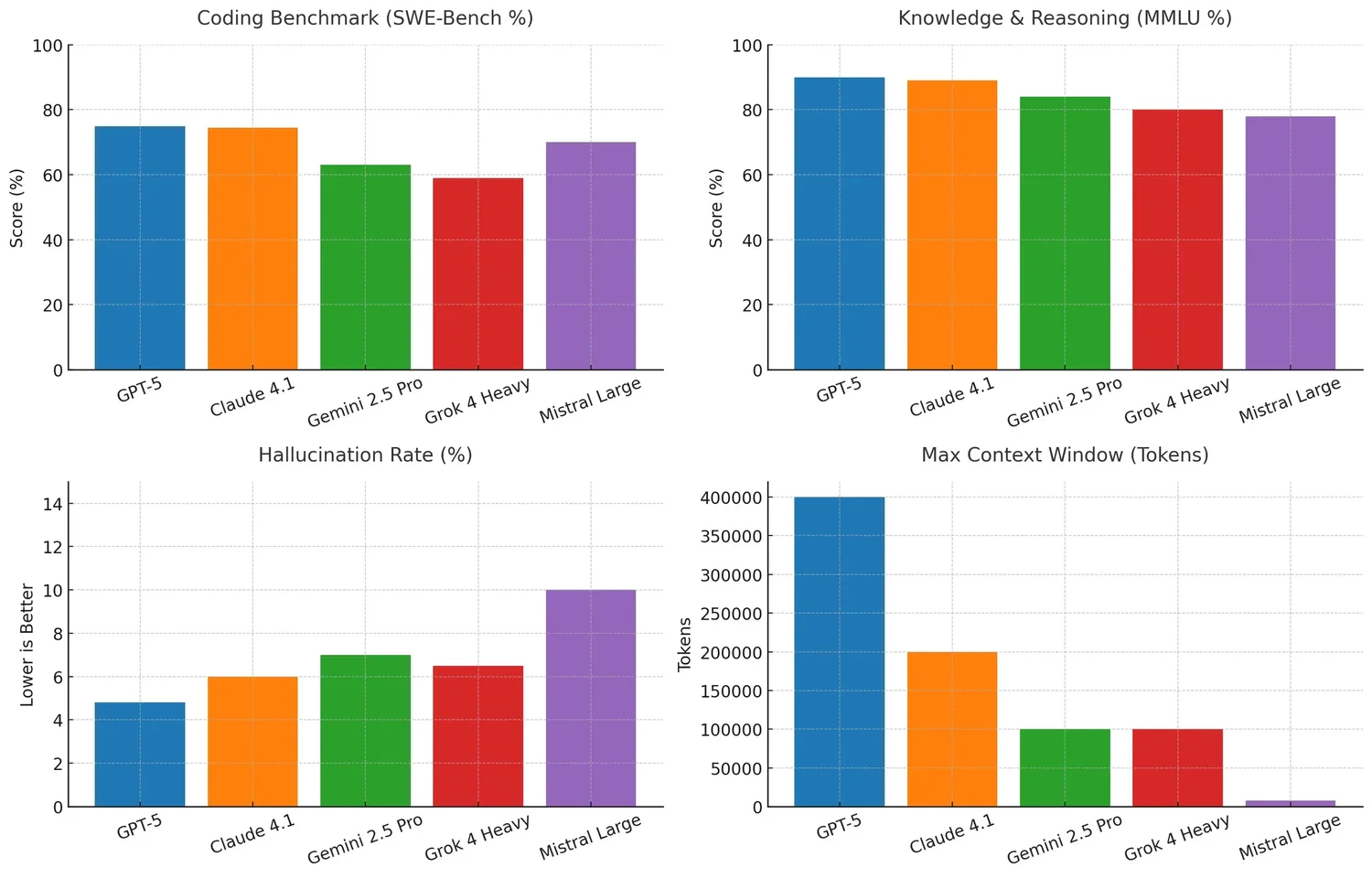
Which AI is best for branding work? Any of the big three work with these prompts. I prefer Claude for nuanced brand and voice work because it holds context well and writes naturally, but ChatGPT and Gemini are strong too. See my full model comparison to choose.
Is this the same as personal branding? No. This is about your business or product brand (positioning, category, differentiation). For building your own name, audience, and content as an individual, use my personal branding prompts instead.
Keep going

Written by Jon Miksis
Founder of AI Hustle Guy, Make the Leap, and Europe Flight Club, and the travel blogger behind Global Viewpoint (9+ years, 73 countries). He brings 9+ years of coaching and mentorship experience and has facilitated 23 transformation retreats across four continents. Every AI tool and prompt on this site gets tested on his own businesses first.
Get my free AI prompt pack
Join 300+ founders, creators, and professionals. I’ll send you my go-to AI tools and copy-paste prompts that save hours every week. No spam.